Character
The Story of French Narcissus
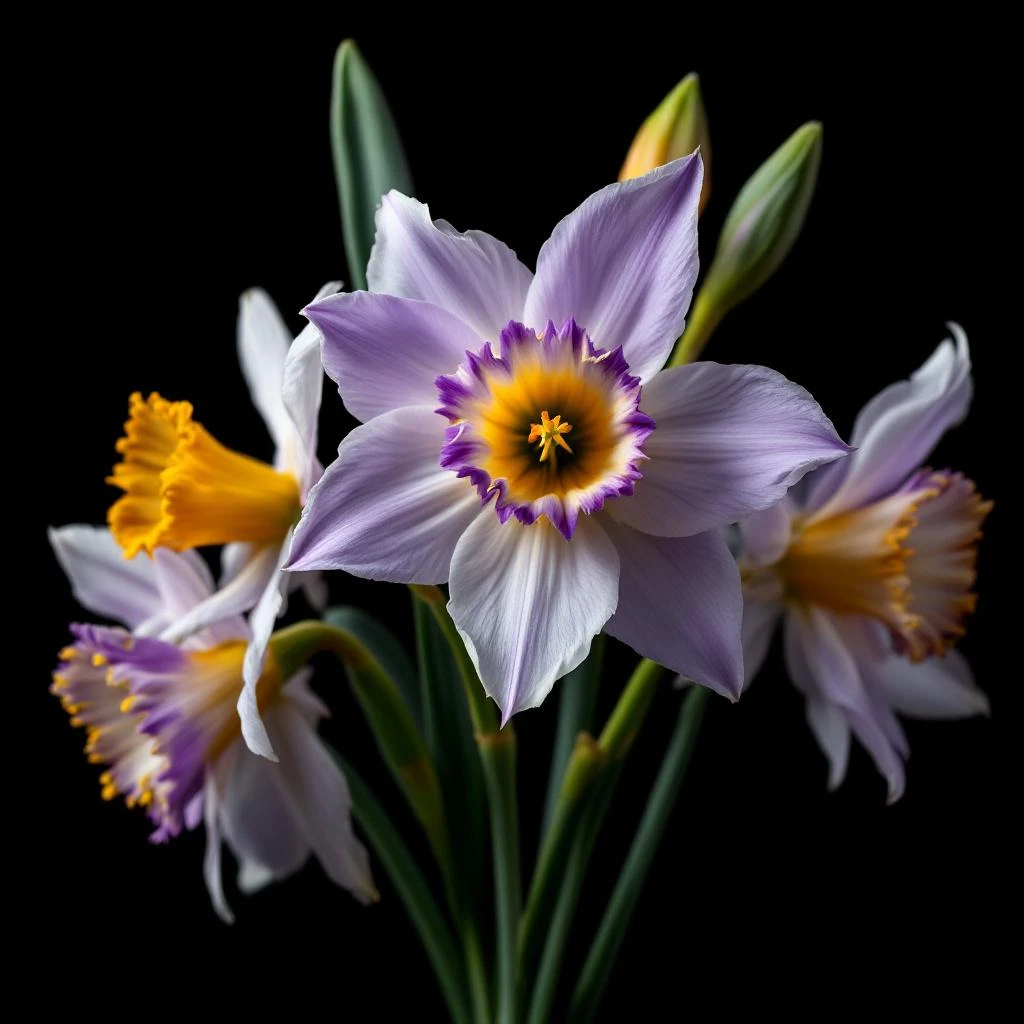
French Narcissus, particularly the poetic variety with its distinctive white petals edged in crimson, grows wild across central France and the maritime Alps. Cultivated in the flower farms around Grasse, its mesmerizing honeyed scent weaves green, floral, warm earthy, and subtly animalic facets into perfume.
Heritage
Narcissus holds one of the longest documented histories in perfumery. Arab craftsmen first embraced it, passing their knowledge to the Romans, who crafted a dedicated unguent called Narcissinum. In India, the flower joined jasmine, sandalwood, and rose as one of the sacred oils applied before prayer. The name itself carries ancient weight: derived from the Greek word "narke," meaning numbness, it was chosen for the flower's overwhelming fragrance that ancient cultures believed induced a kind of trance. Today, Narcissus poeticus grows wild in central France and the maritime Alps, its white petals frilled with red around their trumpets. The Grasse region's flower farms continue perfumery's living heritage with this ingredient, which appears in approximately 11% of modern quality fragrances including classics like Fatale and Samsara.
At a Glance
1
Feature this note
France
Primary source region
Ingredient Details
Solvent extraction
Flower petals
Did You Know
"The name derives from the Greek "narke" (to be numb), but refers not to any toxic properties—it describes the overwhelming, trance-inducing intensity of the fragrance itself."