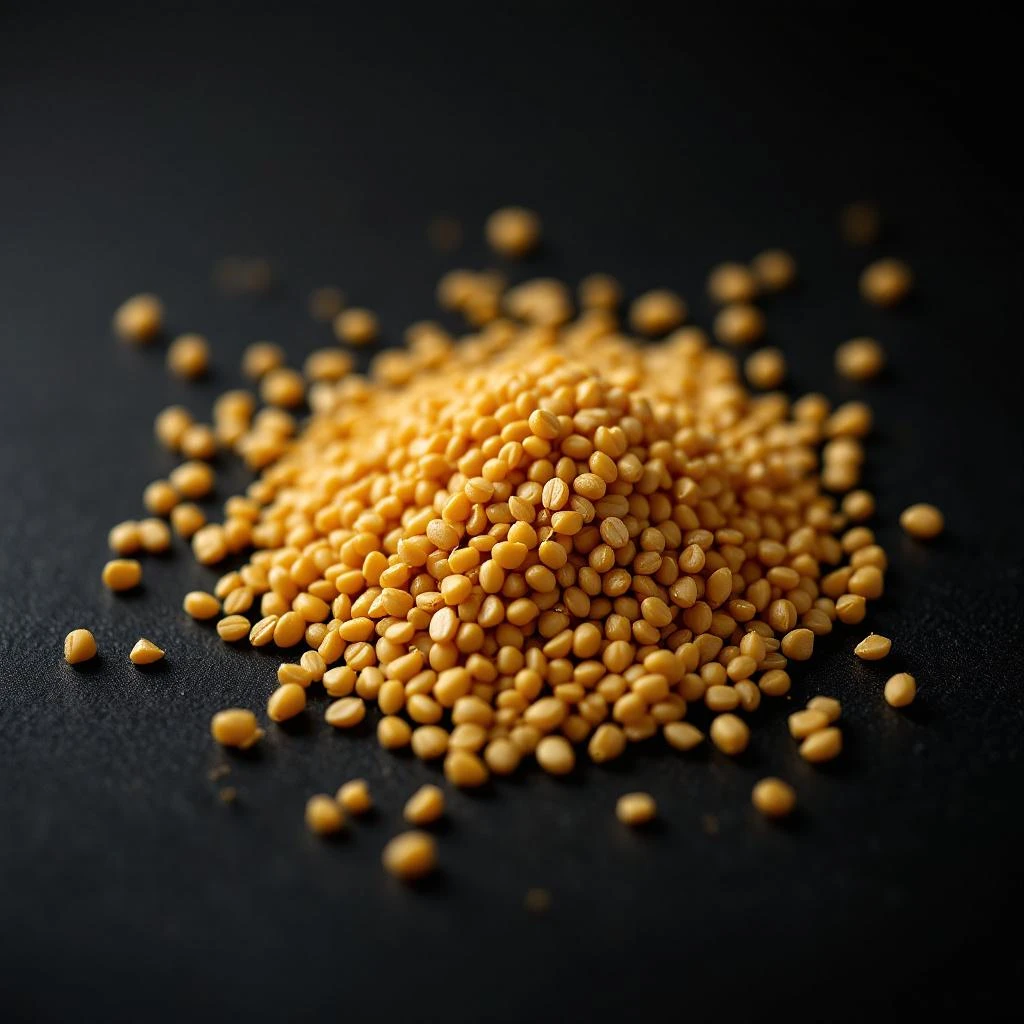

Character
The Story of Fenugreek absolute
A warm, resinous spice with undertones of caramel and hay. Fenugreek absolute brings depth and earthiness that bridges gourmand and aromatic fragrance families.
Heritage
Fenugreek traces its use in India to approximately 2000 B.C., where it appeared in Ayurvedic texts as a warming medicinal herb. Ancient Egyptians incorporated it into mummification rituals and burned it as incense during ceremonial practices. The Greeks gave the plant its enduring Latin name, foenum-graecum, meaning Greek hay, because merchants used it to scent inferior quality fodder. Arab perfumers of the classical period recognized fenugreek for its spicy and herbal character, incorporating seeds and roots into early fragrance traditions. Throughout the Mediterranean and Middle East, the spice served both culinary and aromatic purposes for millennia before entering modern Western perfumery. Today, India remains the primary source of high-quality fenugreek for fragrance use, cultivating the crop in fertile agricultural regions that have produced this ingredient for thousands of years.
At a Glance
1
Feature this note
India
Primary source region
Ingredient Details
Solvent extraction
Dried seeds
Did You Know
"The Romans called it "foenum-graecum" - Greek hay - because they used it to mask the smell of poor-quality fodder."