Character
The Story of Egyptian Jasmine Absolute
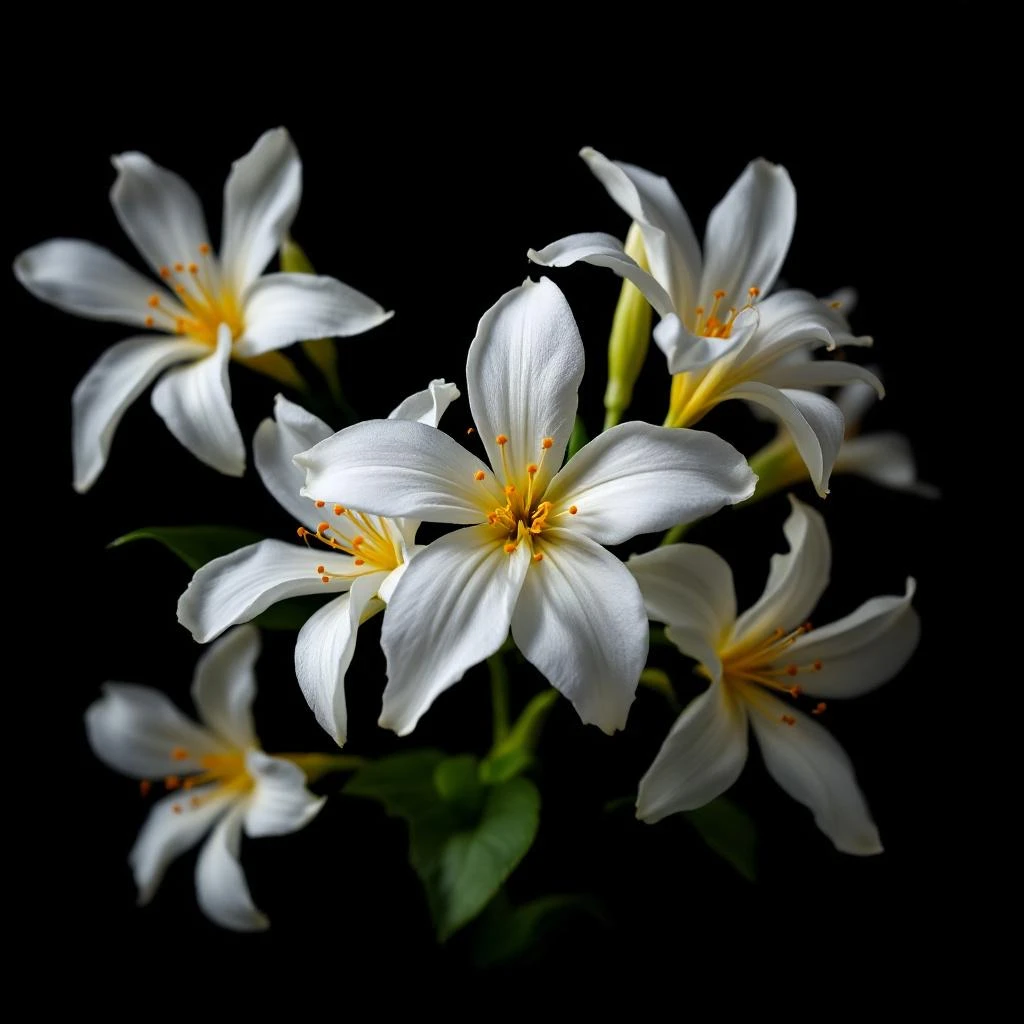
Egyptian Jasmine Absolute captures the intoxicating heart of Jasminum grandiflorum cultivated in the Nile Delta region. This precious material delivers the characteristic warm, indolic floralcy that has made jasmine indispensable in fine perfumery. The absolute possesses remarkable diffusive power, lending volume and sensuality to fragrance compositions from subtle EDT concentrations to rich oriental bases.
Heritage
The jasmine flower's journey to Egypt began centuries after its native origins in India, where it was prized in temple offerings and traditional medicine. Arab traders introduced the plant to North Africa and Moorish-controlled Spain during medieval expansions, and by the 16th century jasmine had spread throughout the Mediterranean basin. The name itself derives from the Arabic "Yasmeen," reflecting this eastern heritage. Large-scale cultivation for the perfume industry began in the 1860s, initially centered in Grasse, France, where growers grafted J. grandiflorum onto hardier J. officinale rootstock to protect against frost. However, Egypt's warmer climate proved ideal for commercial production, and by the early 20th century the industry had shifted decisively to the Nile Delta. Today the village of Shubra Beloula alone accounts for approximately 60% of global jasmine production, supplying the blossoms that find their way into the world's most celebrated fragrances.
At a Glance
7
Feature this note
Egypt
Primary source region
Ingredient Details
Solvent extraction (concrete then absolute)
Fresh flower petals
Did You Know
"Pickers harvest jasmine flowers during pre-dawn hours when the blossoms are still closed buds. The flowers continue developing their signature indolic character after collection, which is why processing must begin within hours of harvest to preserve the volatile compounds responsible for jasmine's unmistakable scent."