Character
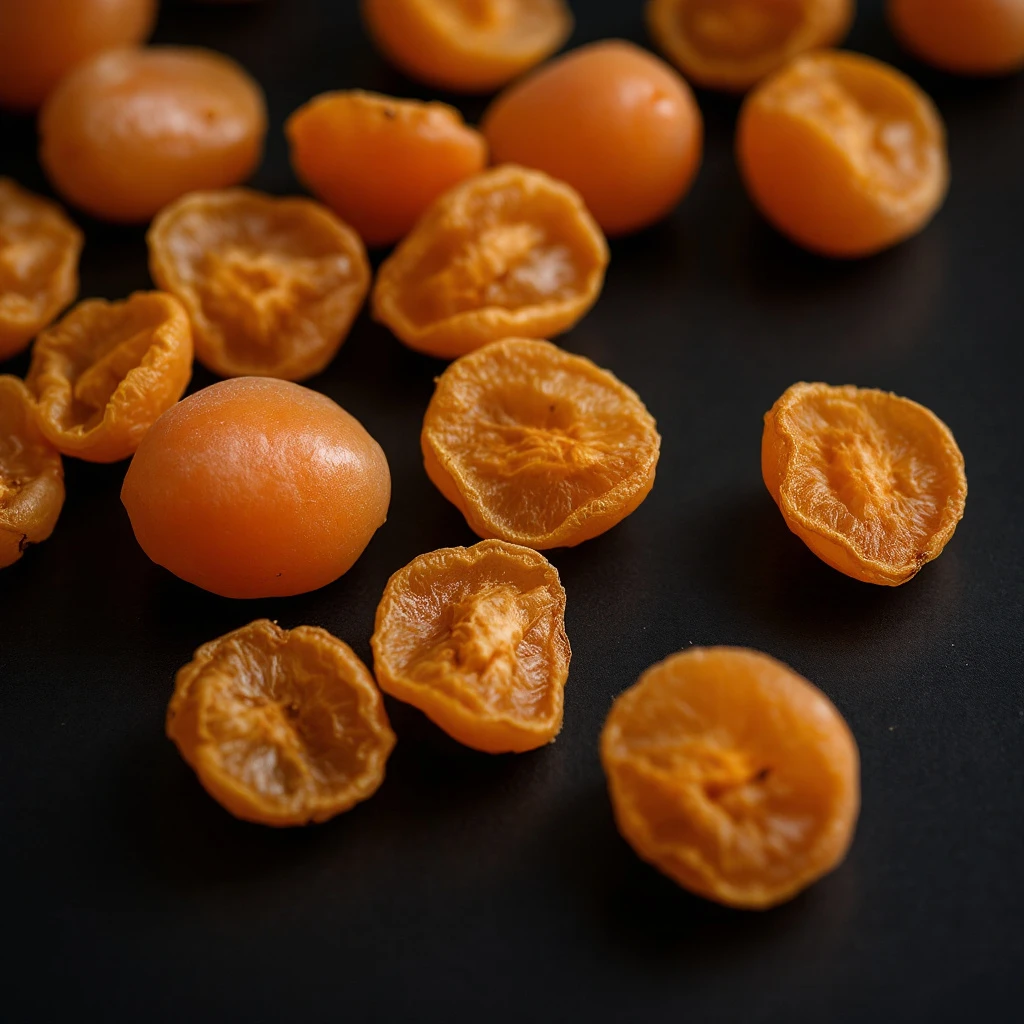
The Story of Dried Apricots
Dried apricots bring a concentrated, honeyed warmth to fragrances. The sun's slow work transforms the fruit's bright acidity into deep caramel undertones and a lingering sweetness that sits beautifully between fruit and resin.
Heritage
Apricots trace their lineage to the mountains of Central Asia, where wild specimens grew across what is now Xinjiang, Uzbekistan, and surrounding regions. Chinese records document cultivation dating to 2000 BCE, and the fruit traveled westward along Silk Road trading routes to Persia and the Mediterranean. Turkish communities perfected sun-drying techniques, creating the wrinkled, intensely flavored dried apricots that remain iconic today. The fruit's journey reflects centuries of human migration and trade, carrying cultural significance from Persian poetry to Armenian cuisine. Modern perfumery adopted apricot notes in the late twentieth century as fruity-solvent-free extraction improved, allowing perfumers to capture the genuine character of dried fruit rather than approximations. Today, apricot features prominently in juice-forward fragrances and warm gourmand compositions.
At a Glance
1
Feature this note
Turkey
Primary source region
Ingredient Details
Solvent extraction and synthetic lactone reproduction
Dehydrated fruit flesh, synthesized lactones for consistency
Did You Know
"Ancient Persian healers used apricot kernels in remedies; modern analysis shows they contain amygdalin, the same compound that gives bitter almonds their characteristic scent."