Character
The Story of Blossoms
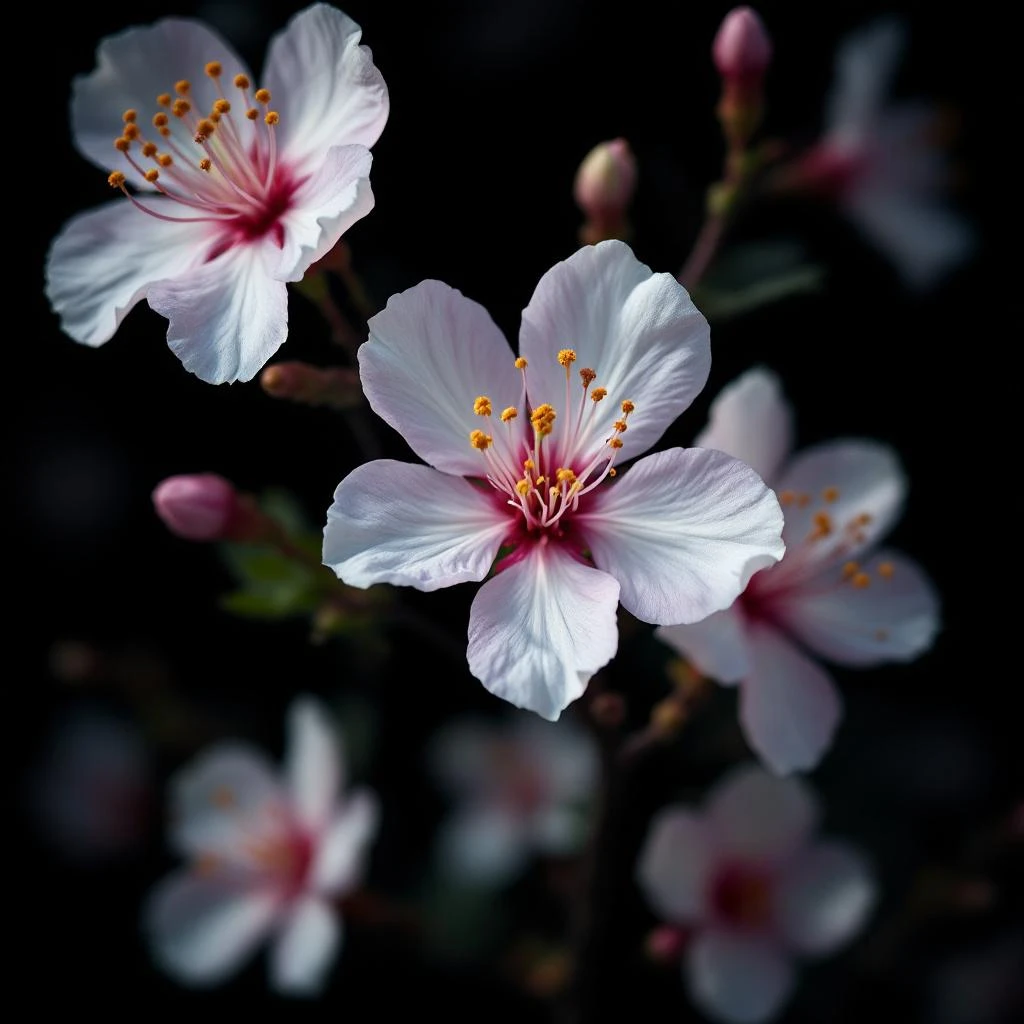
Blossoms form the heart of modern perfumery. From the delicate petals of jasmine to the rich folds of Bulgarian rose, floral ingredients bring warmth, romance, and living texture to fragrance compositions that span centuries of craft.
Heritage
Flower use in fragrance traces to ancient Mesopotamia and Egypt, where priests burned floral resins in religious ceremonies and royalty wore perfumed unguents. The Greeks and Romans advanced extraction techniques, importing exotic blooms from conquered territories. Islamic scholars preserved and refined perfumery knowledge through the medieval period, particularly in Arabia where alchemists experimented with distillation. When crusaders returned from the Middle East carrying fragrant oils, European demand exploded. By the 12th century, Italian pharmacists sold scented waters alongside medicines. The Renaissance saw courts competing for signature scents. Industrial-era innovation brought modern extraction—French chemist absorbent enflleurage in the 1830s, then solvent extraction in the 1870s. Grasse, France became the global center for floral perfumery, its microclimate ideal for growing jasmine, rose, violet, and tuberose. Today India, Morocco, Turkey, Egypt, and China also produce significant quantities of perfumery florals, though the specific character of each region's terroir creates distinct quality profiles that perfumers carefully source.
At a Glance
8
Feature this note
France
Primary source region
Ingredient Details
Solvent extraction, steam distillation, enfleurage, cold pressing
Fresh flower petals and blossoms
Did You Know
"It takes roughly 8 million jasmine flowers to produce just one kilogram of absolute, making it one of the most labor-intensive ingredients in perfumery."
Pyramid Presence