
Character
The Story of Black basil
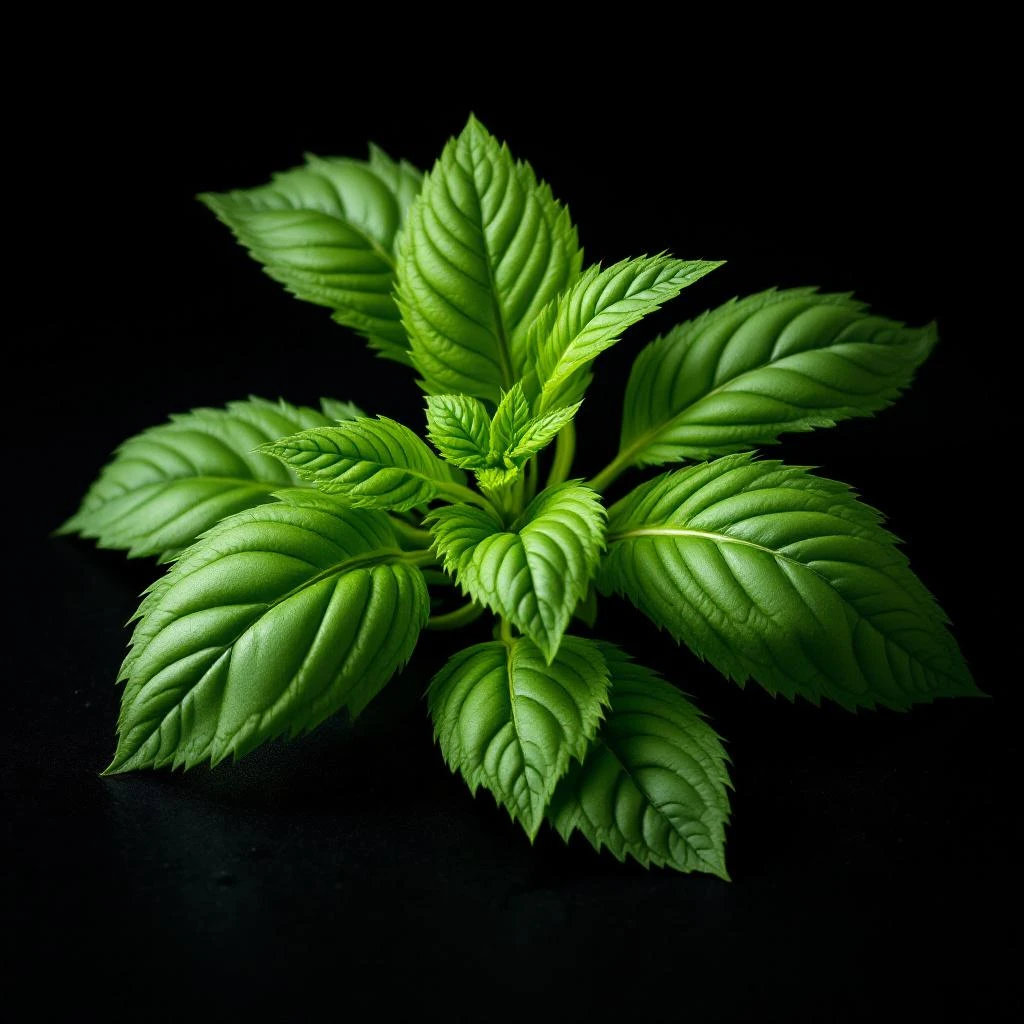
Black basil delivers a sharp, spicy character with green, slightly camphorated top notes and a warm, anise-like heart that adds surprising depth and darkness to fragrance compositions.
Heritage
Basil's use spans at least four millennia, with evidence of cultivation in ancient Egypt where it appeared in burial rituals and medicinal preparations. The Greeks and Romans held contradictory views—associating basil with hatred and poverty in some traditions, while the Egyptians had long considered it sacred. The dark-leafed varieties emerged through selective cultivation, likely in Mediterranean regions, though the precise timeline of their development remains unclear. Unlike the sweet basil common in kitchens, these pigmented cultivars were grown specifically for their aromatic and ceremonial properties. Indian Ayurveda utilized dark basil varieties extensively for spiritual purification and as a protective herb. When perfumery expanded beyond Europe in the 19th century, these darker chemotypes became valued for their distinct olfactory profile compared to common green basil, finding particular favor in masculine and aromatic fragrance families. Today, black basil remains a niche but treasured material, produced in smaller quantities than sweet basil oil and commanding attention from perfumers seeking green-spicy complexity with an unusual dark edge.
At a Glance
1
Feature this note
India
Primary source region
Ingredient Details
Steam distillation
Fresh or dried leaves
Did You Know
"The deep purple-black leaves of this variety contain higher concentrations of anthocyanins, the same antioxidants that give blueberries their color."