Character
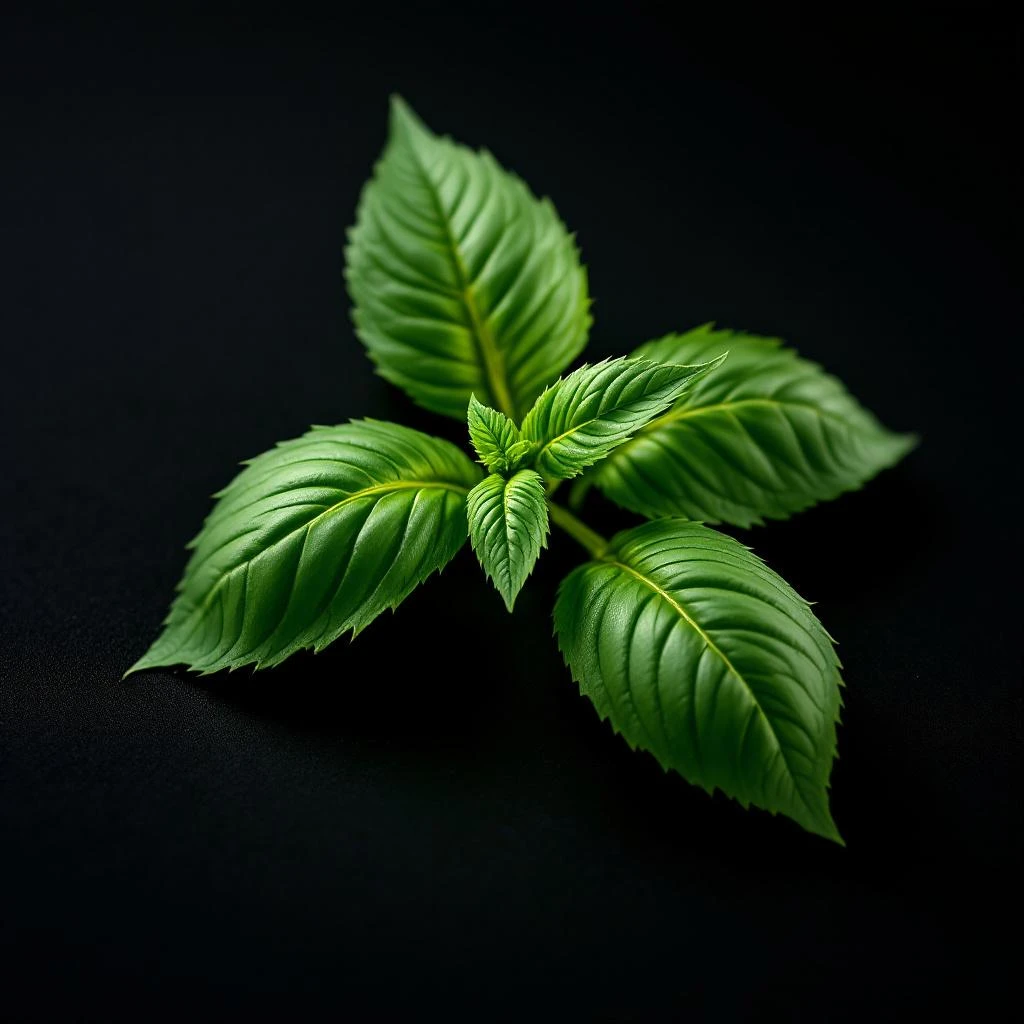
The Story of Basil leaf
Fresh, herbaceous basil leaf injects a crisp green spice into perfume, echoing the plant’s sun‑kissed fields with a bright, slightly peppery lift that awakens the senses.
Heritage
Basil’s scent has traveled with humans for millennia. Archaeological records show that ancient Egyptian priests burned dried basil in temple incense as early as 1500 BC, valuing its sharp green aroma for ritual purification. The plant originated in the foothills of the Himalayas and in the Levant, where Ayurvedic texts describe its medicinal and spiritual properties. By the 16th century, traders carried basil to Europe, where it entered herb gardens of Italy and France and soon appeared in early perfume manuscripts. French court perfumers of the late 1700s experimented with basil essential oil, noting its ability to brighten heavy floral bases. The rise of modern chemistry in Paris between 1889 and 1921 introduced steam distillation, making basil oil more accessible to the burgeoning perfume industry. Throughout the 20th century, basil found a niche in aromatic‑fresh and fougère compositions, often paired with lavender, rosemary, and citrus to evoke a garden after rain. Today, niche houses cite basil as a “royal green” note, a nod to its Latin name basilicum, meaning “royal.” Its continued use reflects a blend of tradition and scientific refinement.
At a Glance
1
Feature this note
India
Primary source region
Ingredient Details
Steam distillation
Fresh leaves
Did You Know
"Basil was the first herb recorded in Egyptian incense recipes, and its leaves were harvested before sunrise to lock in the highest oil content, a practice still used by premium perfumers today."