Character
The Story of African nutmeg
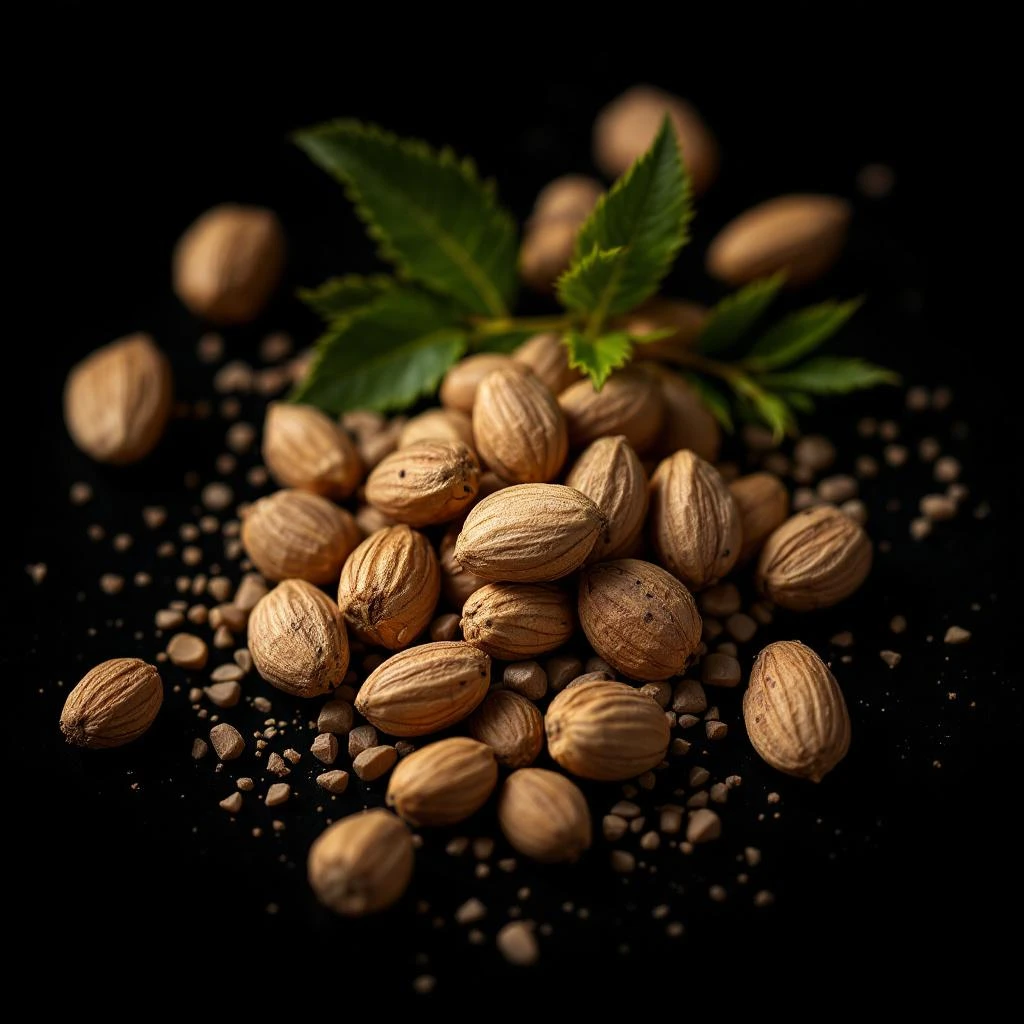
African nutmeg, the fragrant seed of Monodora myristica, offers a warm, spicy aroma with hints of nutty sweetness, bridging African spice markets and modern perfume labs.
Heritage
Monodora myristica has been cultivated in the Sahel and forest zones of West Africa for centuries. Archaeological records from the Kingdom of Ghana (c. 800 AD) show spice residues in burial jars, indicating early ceremonial use. By 3 000 BC, traders from the Punt region exported the seeds to ancient Egypt, where they flavored incense mixtures for temple rites. In the 16th century, Portuguese explorers documented the spice in coastal markets of present‑day Nigeria, noting its dual role as a culinary flavor and a medicinal remedy for digestive ailments. European apothecaries imported the seed to Europe, where it was listed in the 1651 pharmacopoeia as "African nutmeg" to distinguish it from the Indonesian variety. The scent profile attracted early perfumers, and by the late 1800s, African nutmeg oil appeared in niche colognes marketed to the colonial elite. Today, the ingredient honors its heritage, appearing in contemporary fragrances that seek authentic African spice notes.
At a Glance
1
Feature this note
Nigeria
Primary source region
Ingredient Details
Steam distillation
Dried seeds
Did You Know
"The seed of African nutmeg can produce up to 0.5 % essential oil, enough to scent a single bottle of perfume, yet the tree also yields edible fruit used in traditional soups across Nigeria."