Character
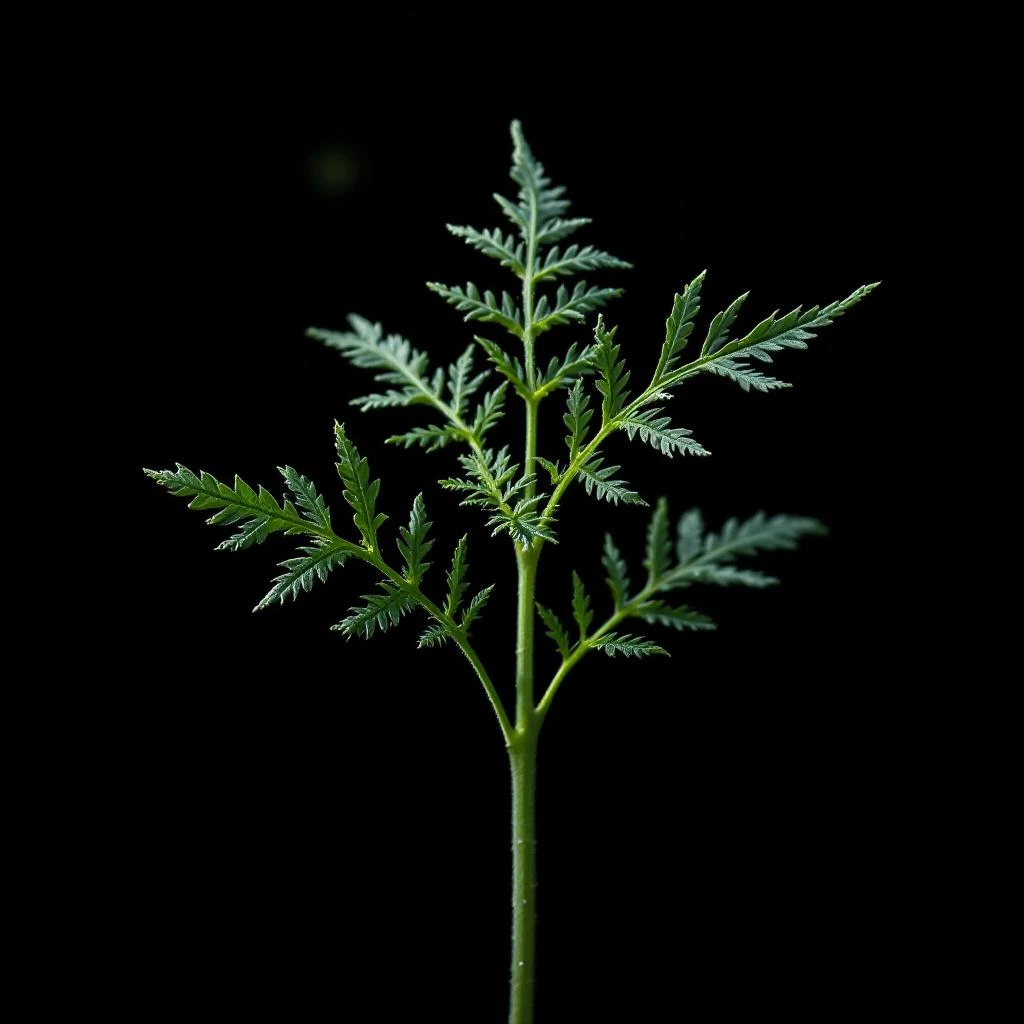
The Story of Absinthe wormwood
The bitter botanical heart of the legendary Green Fairy. Absinthe wormwood is experiencing a quiet renaissance in fine fragrance for the same qualities that once made it infamous: its sharp, green, complex character that cuts through compositions like no other note.
Heritage
Wormwood carries one of the longest aromatic histories of any botanical in use today. Ancient Egyptians documented its medicinal properties in the Ebers Papyrus around 1550 BC, and the Greeks employed it as a bitter tonic and childbirth aid. The plant takes its scientific name, Artemisia absinthium, from Artemisia, the queen of ancient Caria, and the Greek word apsinthion, meaning simply bitter. Yet it was in the Swiss canton of Neuchatel that wormwood found its most famous application. French physician Dr. Pierre Ordinaire developed the first standardized absinthe recipe around 1792, blending roughly 15 botanicals including wormwood, star anise, fennel, and hyssop. The resulting spirit, nicknamed the Green Fairy for its vivid color and supposedly mind-altering effects, became the drink of choice across 19th-century Europe, beloved by artists and writers from Van Gogh to Baudelaire. A 1915 ban in most Western countries nearly erased wormwood from Western use until a revival in the 1990s and 2000s that simultaneously brought the spirit back and gave perfumers renewed access to this singular botanical.
At a Glance
4
Feature this note
Switzerland
Primary source region
Ingredient Details
Steam distillation
Dried aerial flowering parts
Did You Know
"Ancient Egyptians used wormwood as a tonic as early as 1550 BC, making it one of humanity's oldest continuously used aromatic plants."
Pyramid Presence