




The Heritage
The Story of Fugazzi
Amsterdam-born fragrance house built on instinct over formula. Founded in 2018 by Bram Niessink, Fugazzi pairs playful luxury with high-concentration compositions, creating unisex scents that tell stories rather than follow trends. Their concept of 'storysmelling' treats fragrance as an emotional narrative, not just a product. Known for bold pairings, generous oil percentages, and a refusal to play it safe.
Heritage
Fugazzi didn't start with a business plan. It started with a feeling. In 2018, Bram Niessink, a freshly graduated fashion management student from Amsterdam's AMFI, took a trip to Egypt that changed everything. Surrounded by perfume oils in Cairo's markets, he began mixing blends for himself. Friends noticed. Then strangers noticed. One particular blend kept drawing compliments, and Niessink, guided by what he describes as his grandfather's belief in instinct and curiosity, decided to bottle it. The name itself is a provocation. 'Fugazzi' borrows from Italian-American slang, made famous by Donnie Brasco and the silver screen mafiosi of the 1970s. It means 'fake,' which is exactly the point. Niessink spelled it with a double Z and left the meaning deliberately abstract: a wink at the idea that authenticity in luxury is often just good storytelling. Before fragrance, Niessink had already founded BYB Amsterdam, a premium accessories label. That background in fashion gave him an eye for branding and positioning that most indie perfumers lack. Fugazzi launched with seven unisex scents, each built around a narrative concept the brand calls 'storysmelling.' The idea is simple but effective: every fragrance should transport you somewhere specific, not just smell good. From a single market stall in Amsterdam, Fugazzi has grown into a globally distributed brand stocked by retailers like C.O. Bigelow in New York, Cult Beauty in London, and Jovoy in Paris. Their Amsterdam flagship store serves as a physical extension of the brand world, where visitors can experience each fragrance's story firsthand. The 4.8-star rating from over 1,700 customers speaks to a community that doesn't just buy the product but buys into the philosophy.
Craftsmanship
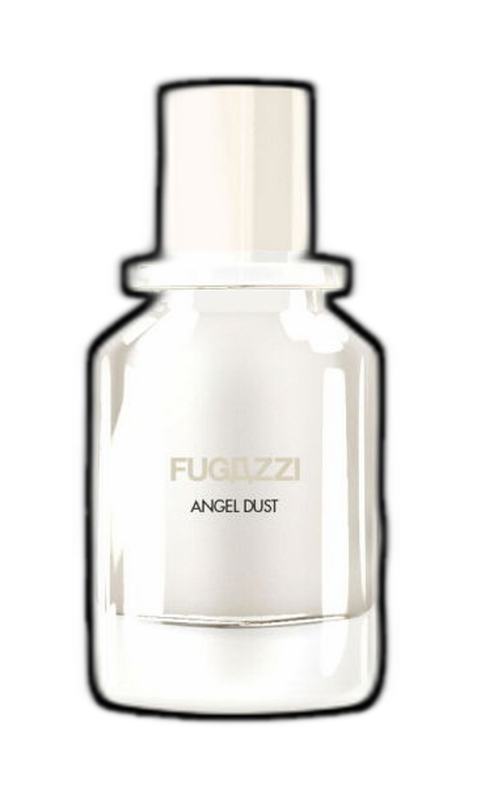
Fugazzi's technical approach is unusually aggressive for an indie house. Their Eau de Parfum line runs at 20% perfume oil, already above the industry average for the category. The Extrait de Parfum line pushes to 30-50%, which puts it in the company of houses charging two or three times the price. This isn't just marketing. The higher concentration translates directly to longevity and sillage, which the community consistently confirms. All compositions are crafted in Europe, though Niessink sources ingredients from around the world. The brand's signature scent, Parfum 1, pulls from the mountainous regions of northeastern India and Mediterranean Spain. Angel Dust revolves entirely around cashmeran, a synthetic molecule that most houses use sparingly but Fugazzi pushes to the foreground. Nocologne, the brand's cologne-strength offering, required 24 iterations to solve a fundamental challenge: how to make a high-concentration extract that still reads fresh and light. The answer was a 30% oil concentration that defies the usual cologne rules. A quietly distinctive detail is the inclusion of two patented, odorless herbal ingredients in every composition, designed to reduce nervousness and promote a sense of well-being. It's the kind of detail that blurs the line between fragrance and wellness, and it reflects Niessink's belief that what you wear should make you feel better, not just smell better. The bottles themselves are clean, monochromatic, and deliberately ungendered. No florals-for-her or dark-glass-for-him. The design language says the same thing as the juice inside: this is for anyone confident enough to wear it.
Design Language
Fugazzi's visual identity is stripped-back luxury. The bottles are uniform in shape, differentiated by color rather than silhouette, which gives the lineup a cohesive shelf presence that most indie brands lack. The monochrome palette and minimal typography reflect Niessink's fashion background: clean lines, no ornamentation, nothing that would look out of place next to a Jil Sander campaign. The brand world extends beyond the bottle. Their Amsterdam flagship store is designed as an immersive experience rather than a retail space, letting visitors engage with each fragrance's story in a physical environment. The discovery set, which comes with a full refund voucher toward a full bottle, turns sampling into a zero-risk proposition, a smart move that reinforces the brand's confidence in its own product. Online, Fugazzi leans into lifestyle content and community. Their Instagram presence blends product shots with mood imagery that sells the feeling, not the fragrance. The brand's social media following, particularly on fragrance TikTok, has been a significant growth engine. Angel Dust's viral moment on TikTok brought a wave of new customers who came for the hype and stayed for the quality. The overall aesthetic is what happens when someone from the fashion industry builds a fragrance brand: the packaging is designed for how it looks on your shelf, the naming is designed for conversation, and the experience is designed to feel like discovering something before everyone else does.
Philosophy
Fugazzi operates on a single principle: fragrance should be an extension of personality, not a mask over it. Niessink has been vocal about building the brand as a reaction to what he saw as homogeneity in the beauty industry. Where other houses were going minimal, Fugazzi went bold. Where others played safe with gender-specific marketing, every Fugazzi bottle carries the word 'unisex' without apology. The concept of 'storysmelling' is central. Each fragrance is designed to evoke a specific emotion, memory, or place. Saint Remy channels the tension between peace and chaos in Van Gogh's painting The Irises. Workaholic captures the electric buzz of a city that never sleeps. Angel Dust celebrates the power of the introvert. These aren't marketing afterthoughts; they're the starting point of every composition. Niessink's lack of formal perfumery training is treated as a feature, not a bug. Without industry conventions guiding his nose, he gravitates toward unexpected pairings: burnt coffee with hazelnut, coconut water with amber, cashmeran at center stage with nothing else competing for attention. The result is a catalog that feels distinctly personal, as if each bottle contains a fragment of a larger autobiography.
Key Milestones
2014
Bram Niessink begins studying Fashion Management at AMFI Amsterdam.
2018
Fugazzi founded in Amsterdam after Niessink's trip to Egypt inspires him to turn perfume oil experiments into a brand.
2019
Official launch with seven unisex fragrances including Parfum 1, Saint Remy, and Goudh. Initial distribution through niche beauty retailers across Europe.
2021
Angel Dust launches and quickly becomes the brand's breakout hit, building a cult following through word of mouth and social media.
2023
Nocologne releases as a 30% oil 'anti-cologne,' requiring 24 formula iterations. Brand expands to major international stockists including C.O. Bigelow and Cult Beauty.
2024
Angel Dust Extrait de Parfum launches alongside Hair Mist and Body Mist extensions. Amsterdam flagship store opens.
At a Glance
Brand profile snapshot
Origin
Netherlands
Founded
2018
Heritage
8
Years active
Collection
1
Fragrances released
Avg Rating
3.9
Community sentiment