The Story
Why it exists.
The beginning
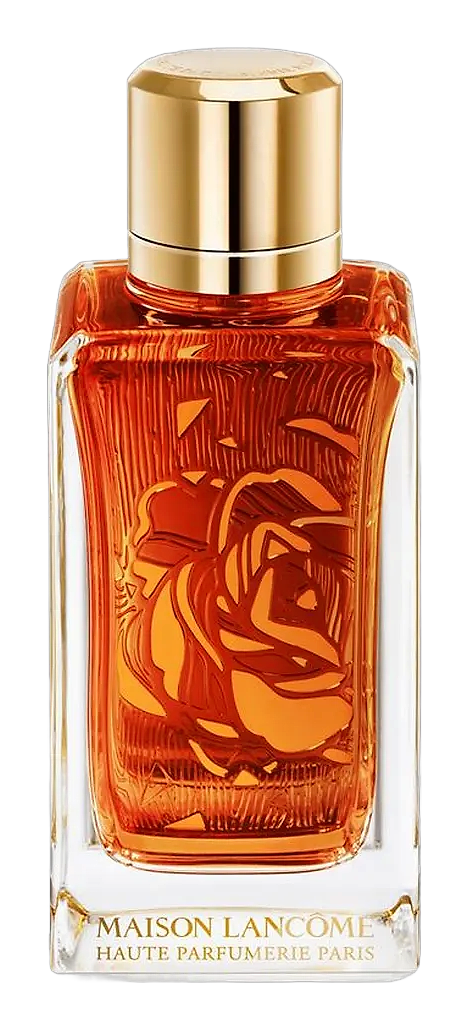
Maison Lancôme's Les Parfums Grands Crus collection reimagines the house's heritage as high perfumery, each fragrance a single-origin composition, crafted with the precision of a winemaker selecting grapes. Oud Bouquet, created by Fabrice Pellegrin and relaunched in 2016, belongs to this lineage of considered luxury. The brief was simple: take oud, that ancient resinous wood prized across cultures for centuries, and filter it through a French sensibility. Not the dense, smoky oud of the Middle East, something softer. Accessible. Almost tender.
What makes Oud Bouquet distinctive is its balance of indulgence and restraint. The oud doesn't arrive abrasive or medicinal. Instead, praline opens the composition, a nutty caramel sweetness that primes the skin for the wood's warmth. Rose threads through the heart, keeping the darkness lifted. Vanilla anchors everything in a creamy, balsamic base that lingers long after the initial spray. It's oud for people who find most oud fragrances overwhelming. A gateway, if you're brave enough to call something this rich a gateway.
The evolution
The opening arrives sweet and immediate, praline sweetness coating the tongue, almost edible. Within minutes, the oud emerges: dark, warm, resinous but never sharp. The rose appears around the 20-minute mark, softening the edges without diluting them. What surprises is the staying power: the vanilla-to-oud base holds for hours, shifting from a warm skin scent to something that reads as skin itself. By hour eight, it's woodsmoke and sugar. The kind of drydown that makes you smell your wrist at random moments.
Cultural impact
Oud Bouquet arrived during the mid-2010s wave of accessible luxury fragrances, positioning oud as an approachable material for mainstream wearers rather than a niche specialty. The praline note proved decisive in softening oud's traditional associations with smoke and intensity, creating a bridge for consumers new to woody materials. This sweet oriental approach influenced subsequent releases across multiple brands, normalizing oud in women's fragrances where it had previously been rare. The Les Parfums Grands Crus collection treated each fragrance as an artistic statement rather than a commercial product, marking a deliberate shift in how prestige houses marketed niche-quality compositions to broader audiences.